
BrainPOP Verdict
AI-generated illustration — not a retailer product photo.
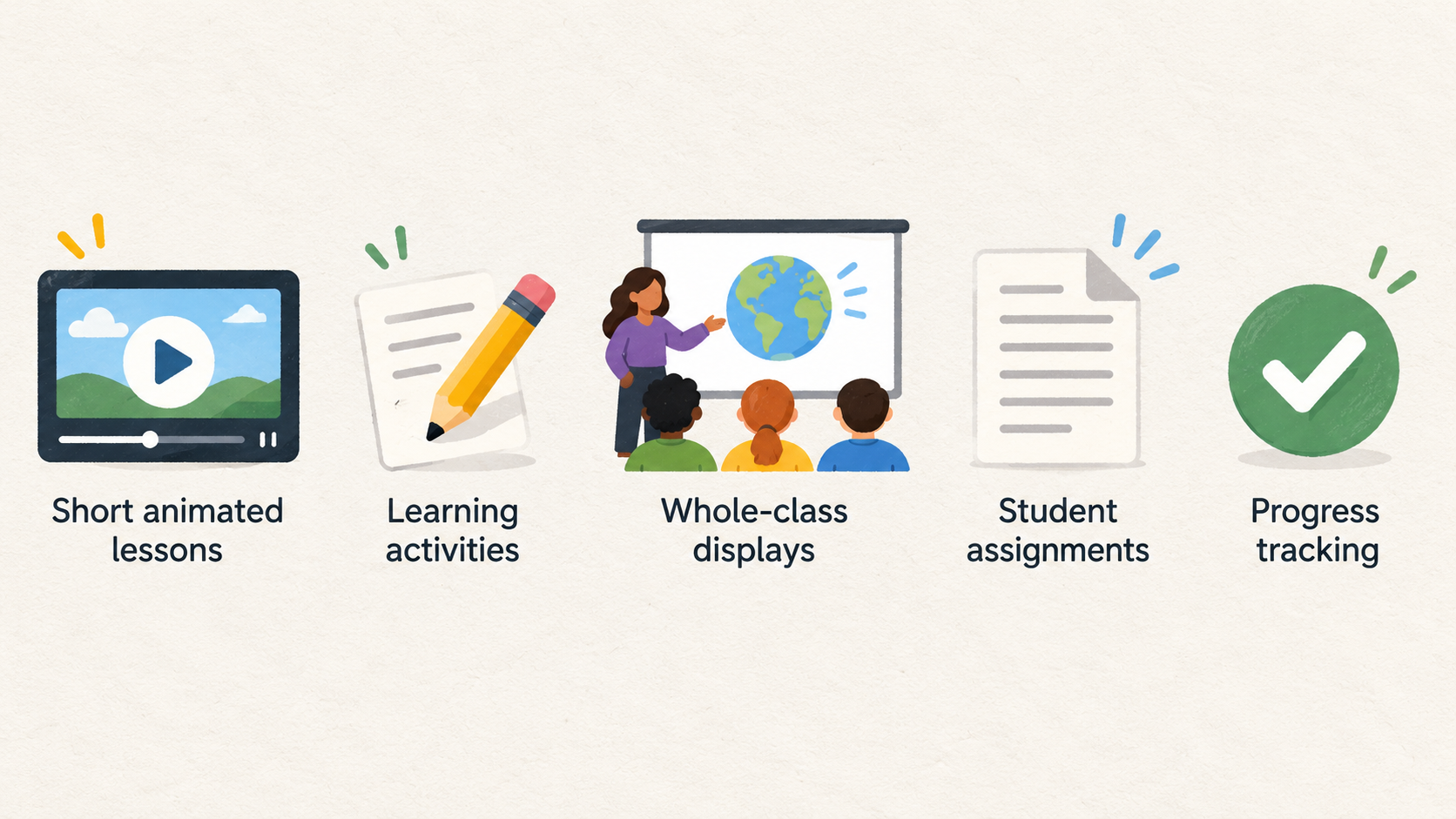
BrainPOP is a sensible option for teachers, school leaders and families looking for animated, topic-based learning content rather than a full curriculum in a box. Its core model is straightforward: short animated lessons introduce a wide range of school and life topics, followed by learning activities. For a teacher using whole-class displays, that can make it a practical way to introduce a concept, build background knowledge or begin a discussion.
The strongest version of the offer is at school or district level. BrainPOP says those plans add student assignments, progress tracking, reporting, administrative controls and relevant integrations. That makes the platform more useful when a school wants consistent access and visibility across classes, not simply a library of videos.
The main caveat is that access levels materially affect what buyers receive. A classroom licence is designed for one teacher and front-of-class use; it does not include student accounts, individual assignments, tracking, differentiation tools or SSO. It is also a paid service, although some resources are free. UK buyers should confirm current plan terms, local curriculum fit and suitability of particular topics before committing.
What Is BrainPOP?
AI-generated illustration — not a retailer product photo.
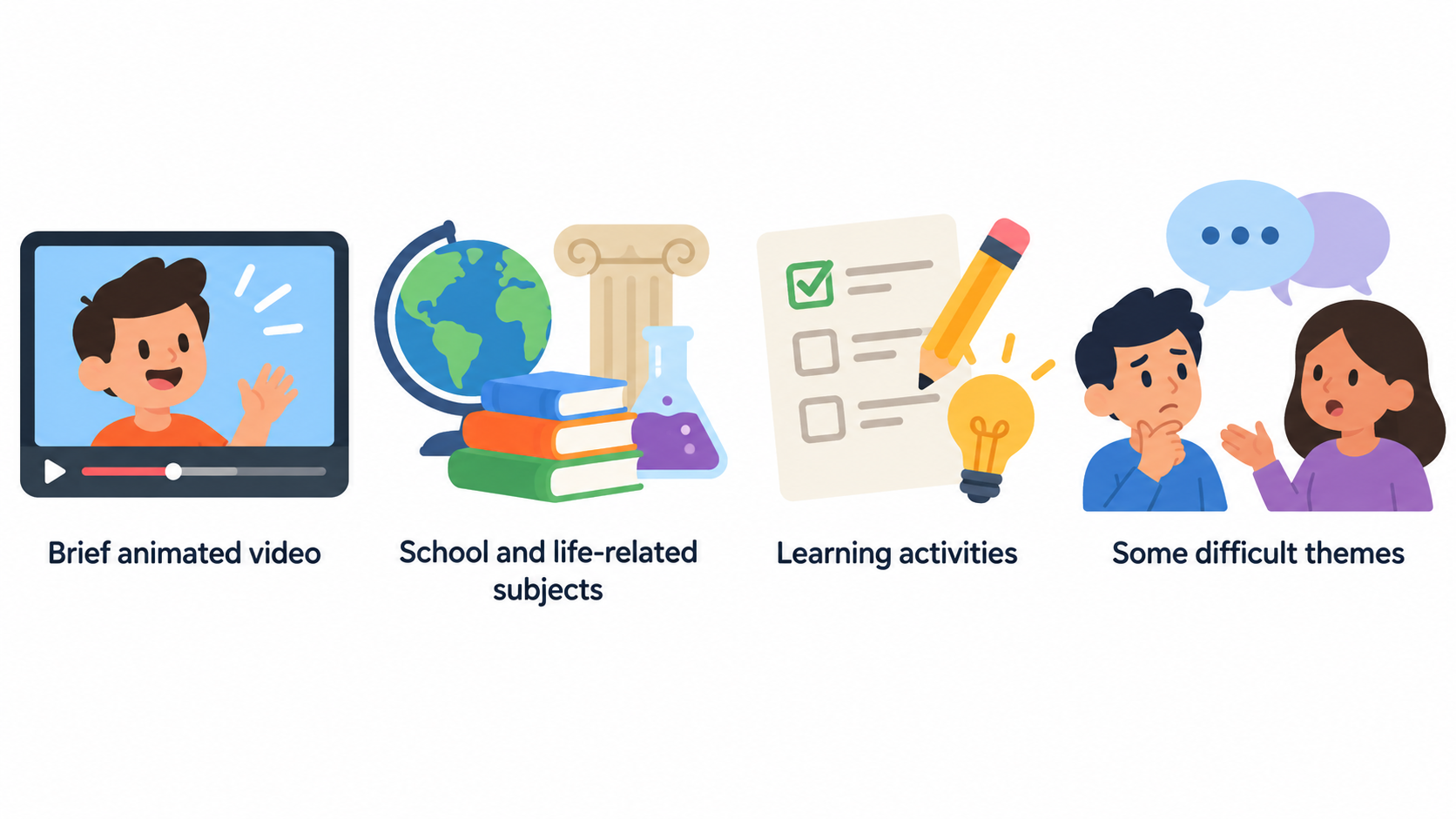
BrainPOP is an animated learning platform. Its lessons start with a brief animated video and cover a mixture of school and life-related subjects, from science and history to everyday topics. The service also offers learning activities around its content. Common Sense Media’s review describes the videos and activities as engaging and educational, while noting that some subjects address difficult themes.
The product is sold in different contexts. A classroom subscription is intended for one teacher using BrainPOP in whole-group instruction. According to BrainPOP’s plans page, it provides access to all topics and a curated collection of learning activities designed for front-of-class use.
A school subscription is a different proposition. BrainPOP says it gives teachers and students access to products matched to the school’s grade levels and planned subjects, alongside professional learning courses, assignments, tracking and reporting, administrative controls, and LMS and rostering integrations. District partnerships extend that model across schools, with centralised management, reporting and integrations including LMS, LTI and SSO.
That distinction matters more than the marketing label. A buyer considering BrainPOP should first decide whether they need a shared teaching resource or a student-level platform that supports assignments and monitoring. The latter requires a school-level arrangement, not a single-teacher classroom licence.
BrainPOP Strengths
AI-generated illustration — not a retailer product photo.
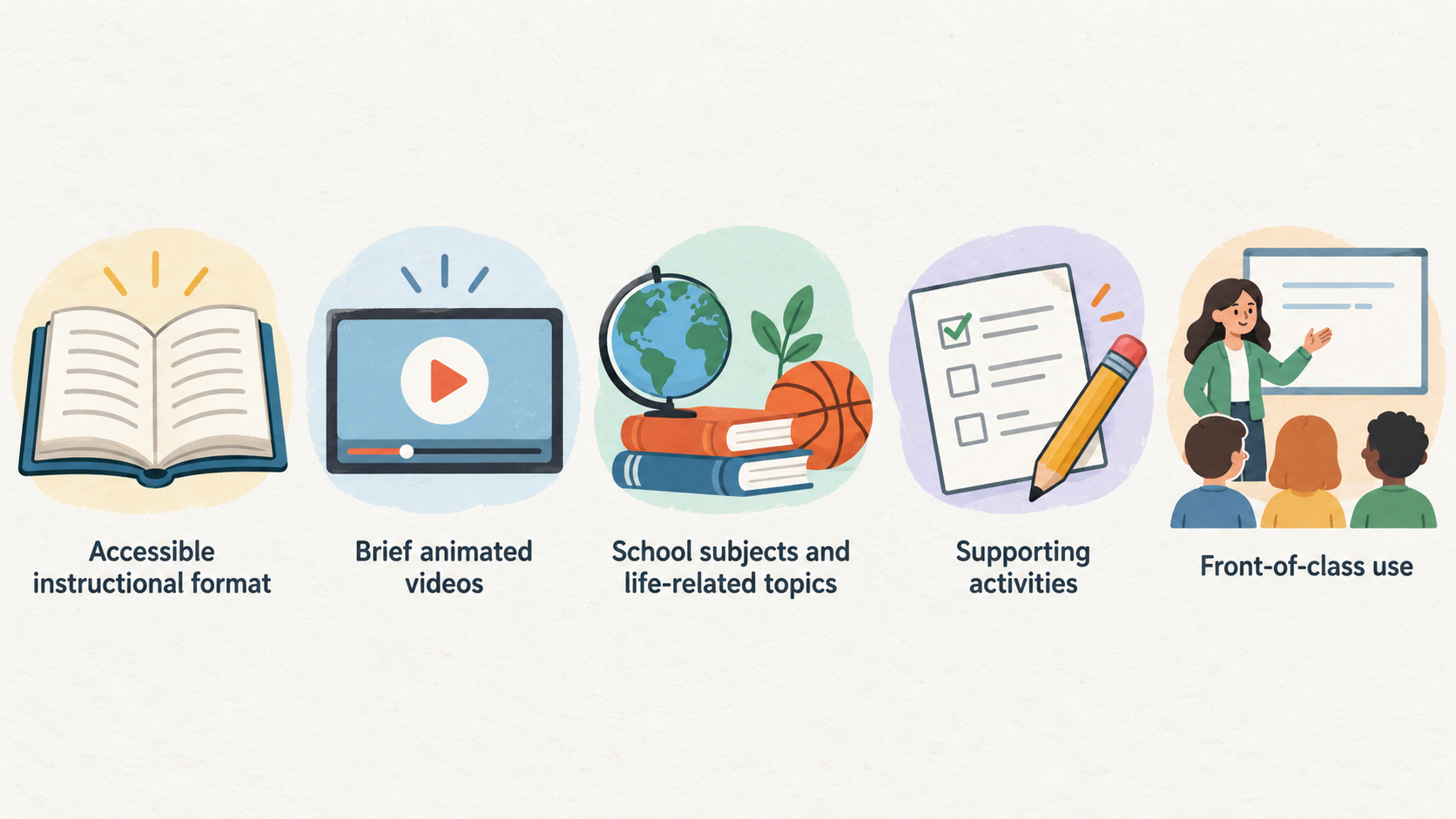
BrainPOP’s clearest strength is its accessible instructional format. Brief animated videos can help introduce unfamiliar vocabulary, establish context before a lesson or give a class a shared starting point for discussion. The range described by Common Sense Media spans conventional school subjects as well as life-related topics, which can be useful for planned teaching where background knowledge is the immediate goal.
The supporting activities add value because they give teachers a route beyond passive viewing. In a whole-class setting, BrainPOP’s classroom licence includes a curated set of activities designed for front-of-class use. This suits teachers who want a structured prompt, a recap or an opening task without needing to manage individual student logins.
For schools, the feature set becomes more substantial. BrainPOP states that school subscriptions include the ability to assign work, track and report on student progress, manage access through admin-level controls, and connect through LMS and rostering integrations. Those features can support a more consistent implementation across teachers and classes, provided the school has a clear plan for how content will be selected and used.
District partnerships may be relevant to larger organisations that need centralised management and reporting. BrainPOP says these plans include district-level usage data, implementation planning, curriculum-focused support and options for custom professional development. That does not establish educational impact on its own, but it does indicate that the offer is designed for system-wide adoption as well as classroom use.
The platform is best viewed as a complement to teaching, not a replacement for curriculum planning. Animated topic lessons and related activities can support explanation, retrieval and discussion, but buyers should still decide how each resource fits their sequence of learning, assessment approach and local requirements.
BrainPOP Limitations and Considerations
Cost and feature boundaries are the first considerations. BrainPOP is a paid subscription service, although Common Sense Media notes that some games and other resources are available for free. Buyers should request or check current terms directly rather than assume that a free resource reflects the access included in a paid plan.
The classroom-to-school distinction is especially important. BrainPOP says a classroom licence gives one teacher one login for whole-group instruction. It explicitly excludes student accounts, individual assignments, progress tracking, differentiation tools and SSO; these are available only with a school subscription. A teacher who mainly wants a shared classroom resource may find that acceptable. A school seeking individualised workflows, monitoring or account integration should assess a school plan instead.
Content suitability also needs review. Common Sense Media identifies BrainPOP as designed for children in third grade and above and gives it an age 8+ rating. Its review notes serious or sensitive themes in some history and health content, including war, terrorism, puberty, sexual reproduction and substance use. These topics may be handled sensitively, but that does not remove the need for teachers and families to preview a resource and consider the learner group and teaching context.
There are limits to what can responsibly be concluded from the available information. The supplied sources do not establish UK pricing, coverage of UK curriculum requirements, effectiveness outcomes or specific privacy practices. A school should therefore confirm current commercial terms, data and safeguarding information, integration compatibility and local curriculum fit with BrainPOP before procurement. Families should similarly check the relevant plan and preview the topics their child is likely to encounter.
BrainPOP Alternatives
The best alternative depends on the gap BrainPOP leaves for you. Start by defining whether you need video-led topic teaching, adaptive individual practice, curriculum-specific resources, school-wide assessment and reporting, or free supplementary material. These are different jobs, and comparing products only by the size of a content library can obscure the decision.
If animated explanations are the priority, compare other educational video platforms on topic coverage, age suitability, teacher controls and whether activities are usable in the way you teach. If students need to work independently with responsive practice, look for tools whose main purpose is adaptive learning rather than classroom video. If a school needs resources mapped to its local curriculum, evaluate providers that make that mapping explicit and verifiable.
For leaders, the access model should be a comparison criterion in its own right. Check whether a proposed alternative offers individual student accounts, assignments, tracking, reporting, roster management and the integrations your school actually uses. BrainPOP reserves several of those functions for its school subscription, so an apparently cheaper classroom-level option—whether BrainPOP or another provider—may not meet an implementation brief that requires school-wide data or account management.
Free resources can be useful supplementary options for a teacher or family, but they should be assessed separately from paid platform requirements. Consider reliability, content review, account needs and whether the resource supports a coherent lesson or learning routine. A focused shortlist built around your instructional need, learner age range, access model and budget will be more useful than searching for a single universal replacement.
Who Should Choose BrainPOP?
A single teacher may choose BrainPOP when the main need is whole-class, topic-based animated content with supporting activities. The classroom licence is positioned for one teacher and front-of-class use, so it is most relevant where student accounts and individual progress monitoring are not essential. Before buying, check the current licence terms, preview likely content and decide whether the available activities fit your teaching routine.
A school leader may find BrainPOP more relevant when the requirement includes teacher and student access, assignments, tracking, reporting, administrative controls, professional learning and LMS or rostering integration. The school subscription is the level BrainPOP describes as including those features. Leaders should confirm the exact products available for their grade levels and subjects, the implementation support offered, the fit with existing systems and the local curriculum rationale before making a wider commitment.
Families should treat BrainPOP as a paid, animated learning resource rather than assume it provides a complete home-learning programme. Check the available plan, the child’s interests and maturity, and the particular subjects likely to be used. Common Sense Media rates the site 8+ and notes that some lessons cover sensitive historical and health-related themes, so previewing is prudent.
For every buyer type, a short evaluation checklist helps: confirm the plan tier; identify whether individual accounts are needed; review age and topic suitability; check required integrations; and test the proposed use against your own curriculum or learning goals. If those needs are not a close match, compare a video-led, adaptive, curriculum-specific or free supplementary alternative instead.
Frequently Asked Questions
Is BrainPOP suitable for primary-age children?
It can be suitable for some primary-age children, but suitability depends on age, topic and context. Common Sense Media rates BrainPOP 8+ and says it is designed for children in third grade and above. Its content includes a broad mix of school and life topics, including some sensitive history and health subjects. Teachers and families should preview the relevant lesson rather than rely on a general age label alone.
Does a BrainPOP classroom licence include student accounts and progress tracking?
No. BrainPOP says its classroom licence is for one teacher using the platform in whole-group instruction. Student accounts, individual assignments, progress tracking, differentiation tools and SSO are available only with a school subscription. If those capabilities are required, confirm the current school-plan terms directly with BrainPOP.
Can schools integrate BrainPOP with their LMS or rostering system?
BrainPOP says school subscriptions include LMS and rostering integrations. Its district partnerships list LMS, LTI and SSO integrations, alongside centralised management and reporting. Compatibility can depend on the systems and plan involved, so a school should verify the current integration requirements and setup process before purchase.
Is BrainPOP free to use?
BrainPOP is a paid subscription service, though some games and other resources are available for free. Free access should not be assumed to include the features offered by classroom or school subscriptions. Check the current plan details for the access and functionality you need.
Related reading
- Best K-12 classroom learning tools: evidence-led top choices
- BrainPOP vs BrightCHAMPS: which is the better fit
- BrightCHAMPS review: who it suits and who should skip it
- How K-12 classroom learning tools should fit, feel, and perform
Editorial information: About our editorial team · Read our editorial policy · Read our affiliate disclosure.