AI-generated illustration — not a retailer product photo.
Discount School Supply at a Glance
AI-generated illustration — not a retailer product photo.
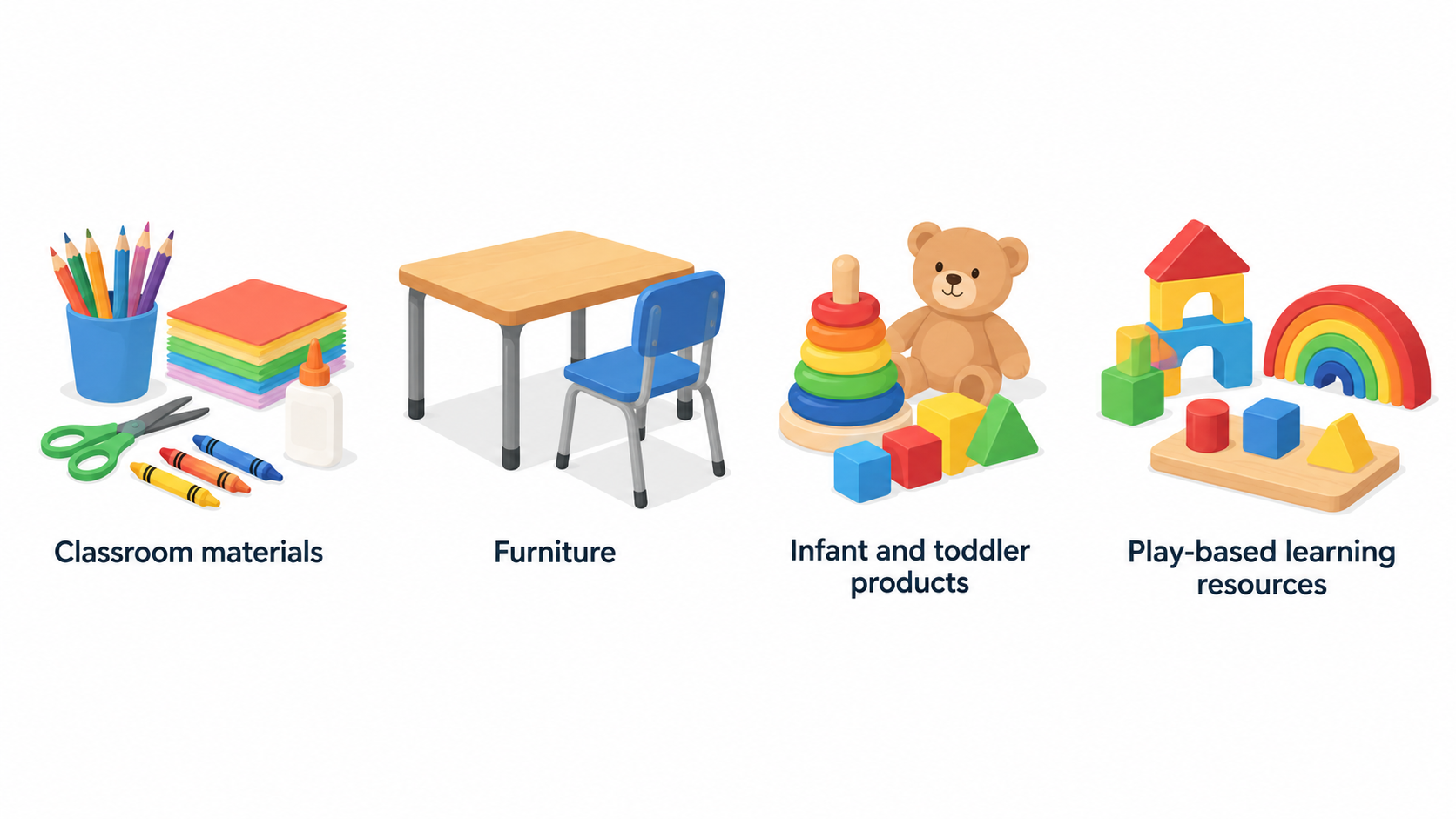
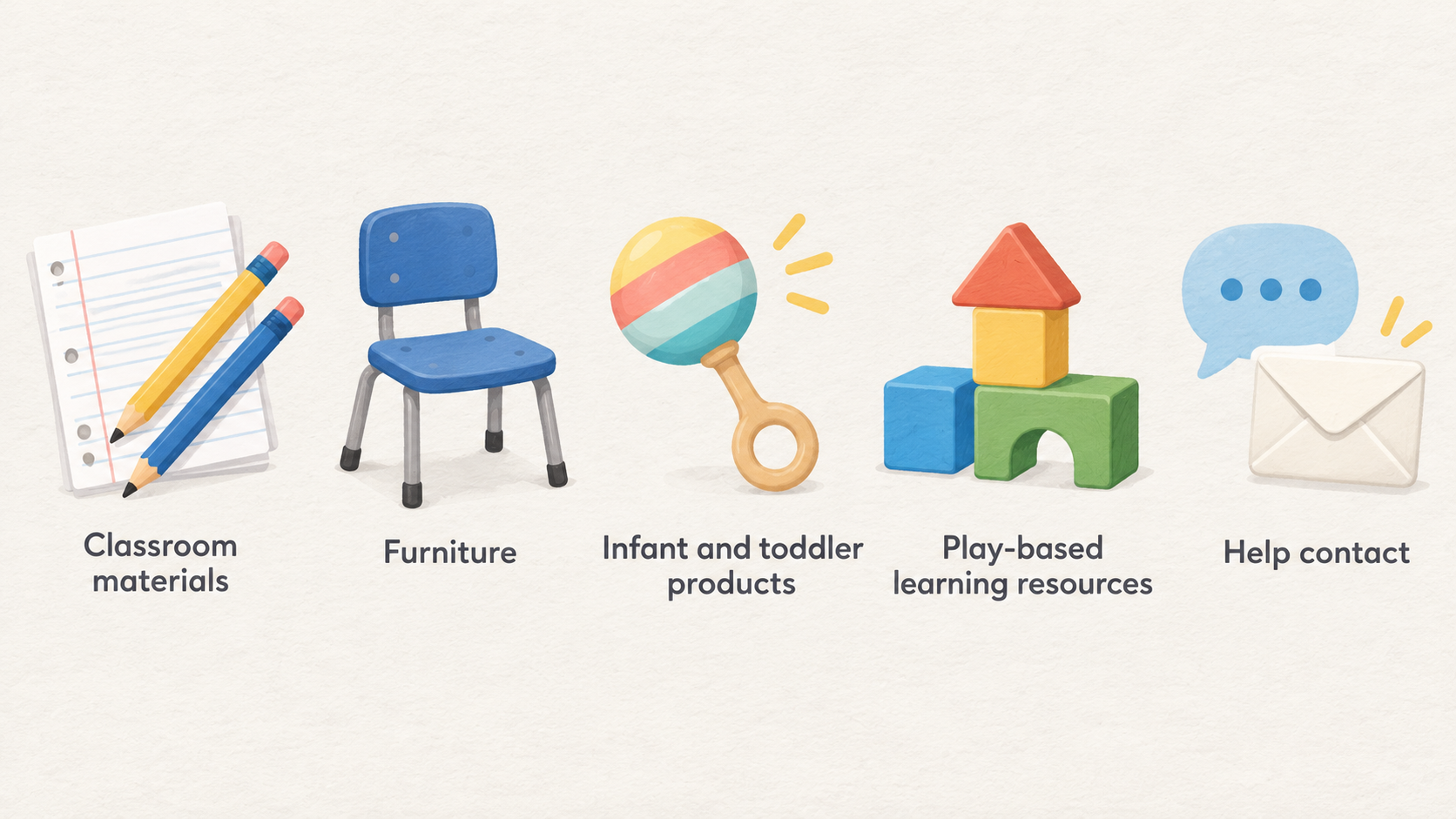
Discount School Supply presents a broad education-focused catalogue that spans classroom materials, furniture, infant and toddler products, and play-based learning resources. Its visible navigation also groups products around programmes and settings such as elementary schools, Head Start, camps, after-school and summer programmes, and youth engagement. That breadth makes it a retailer worth considering when a shopping list covers several classroom needs rather than one narrow product type.
For UK teachers, school leaders and family buyers, however, the useful question is not simply whether the catalogue looks relevant. It is whether the specific products, quantities and order conditions fit the planned use. A classroom may need art consumables, an early-years setting may need play resources, and a school programme may be comparing furniture or supplies across a larger list. Each situation calls for product-level checks before budget is committed.
This is therefore a practical referral assessment rather than a product test. The retailer’s public returns page provides visible category navigation and a help route, but it does not establish that every item is suitable, in stock, deliverable to the UK, or cost-effective for a particular order. Treat the catalogue as a starting point for researching a purchase, then verify the details that matter for your own order.
Where the Catalogue May Be Most Useful
AI-generated illustration — not a retailer product photo.
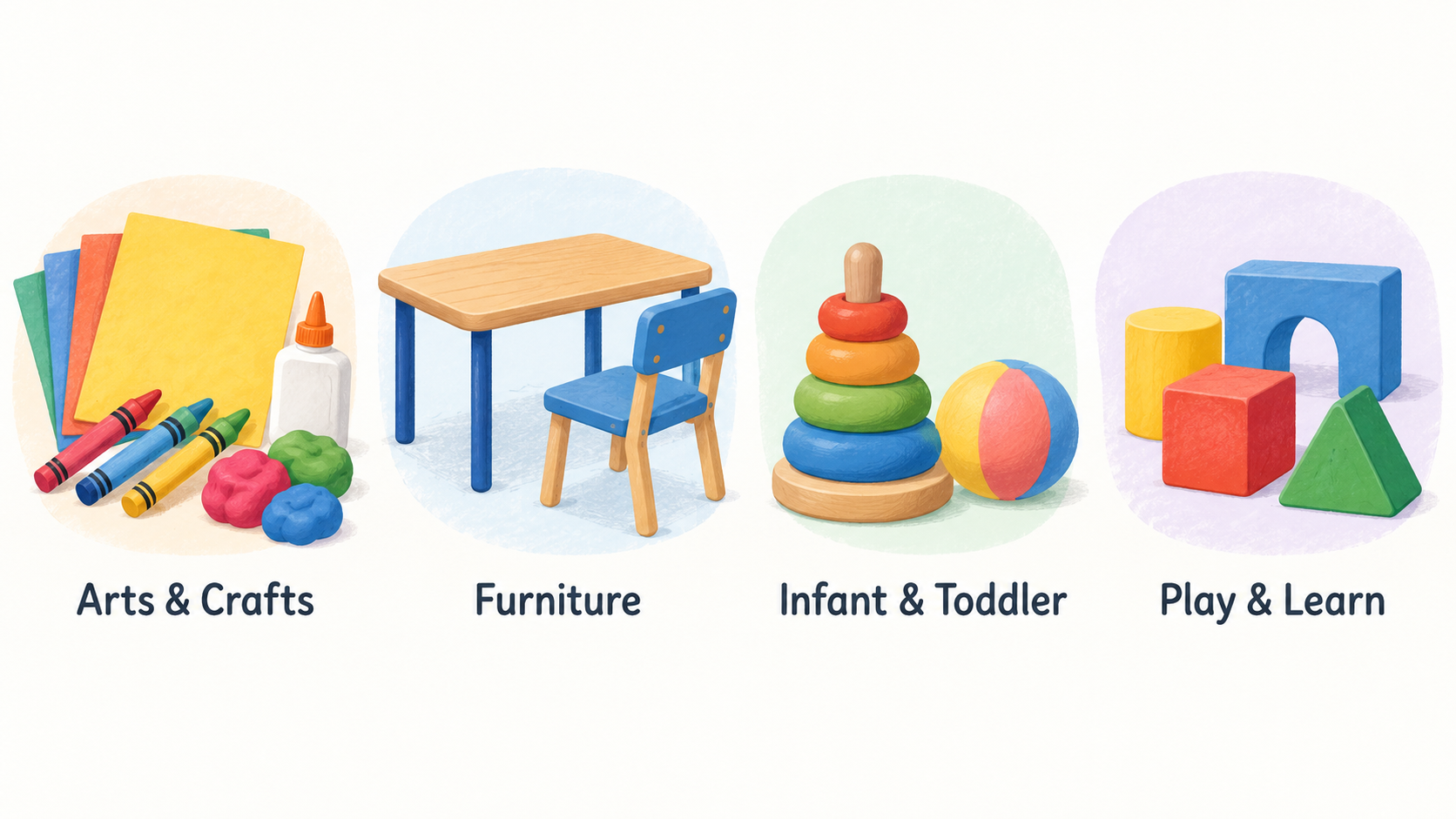
The catalogue appears most relevant where buyers want to explore several familiar classroom and early-years categories in one place. The visible Arts & Crafts section includes supplies such as paper, glue, dough and clay, paint, crayons, markers, chalk, craft kits and classroom value packs. That gives teachers and family buyers a logical place to begin when preparing activity materials, replenishing consumables or comparing options for a project.
Furniture is also shown as a top-level area, which may be relevant to classrooms, nursery rooms and programme spaces that are planning their environment alongside their learning materials. For early-years buyers, the separate Infant & Toddler and Play & Learn categories signal that the catalogue is not limited to older pupils’ desk-based supplies. The navigation also highlights Montessori-inspired and outdoor-learning assortments, which may help buyers narrow an initial search by learning setting or approach.
The programme navigation may be useful for school leaders or organisers who are shopping for camps, after-school activity, faith-based learning, elementary-school or youth-enrichment needs. It suggests a catalogue designed to serve more than one education context. That is particularly helpful when an order has mixed requirements: for example, creative supplies plus play materials, or classroom resources alongside room furnishings.
None of this is evidence of independent product quality, durability or educational outcomes. Nor does category breadth mean that every buyer will find the right specification. A specialist retailer may still be a better fit when a purchase depends on a particular curriculum standard, material requirement, age range, safeguarding need or delivery timetable. Use the visible categories to identify possible matches, then assess the individual listing and order terms.
Limits to Check Before You Buy
AI-generated illustration — not a retailer product photo.
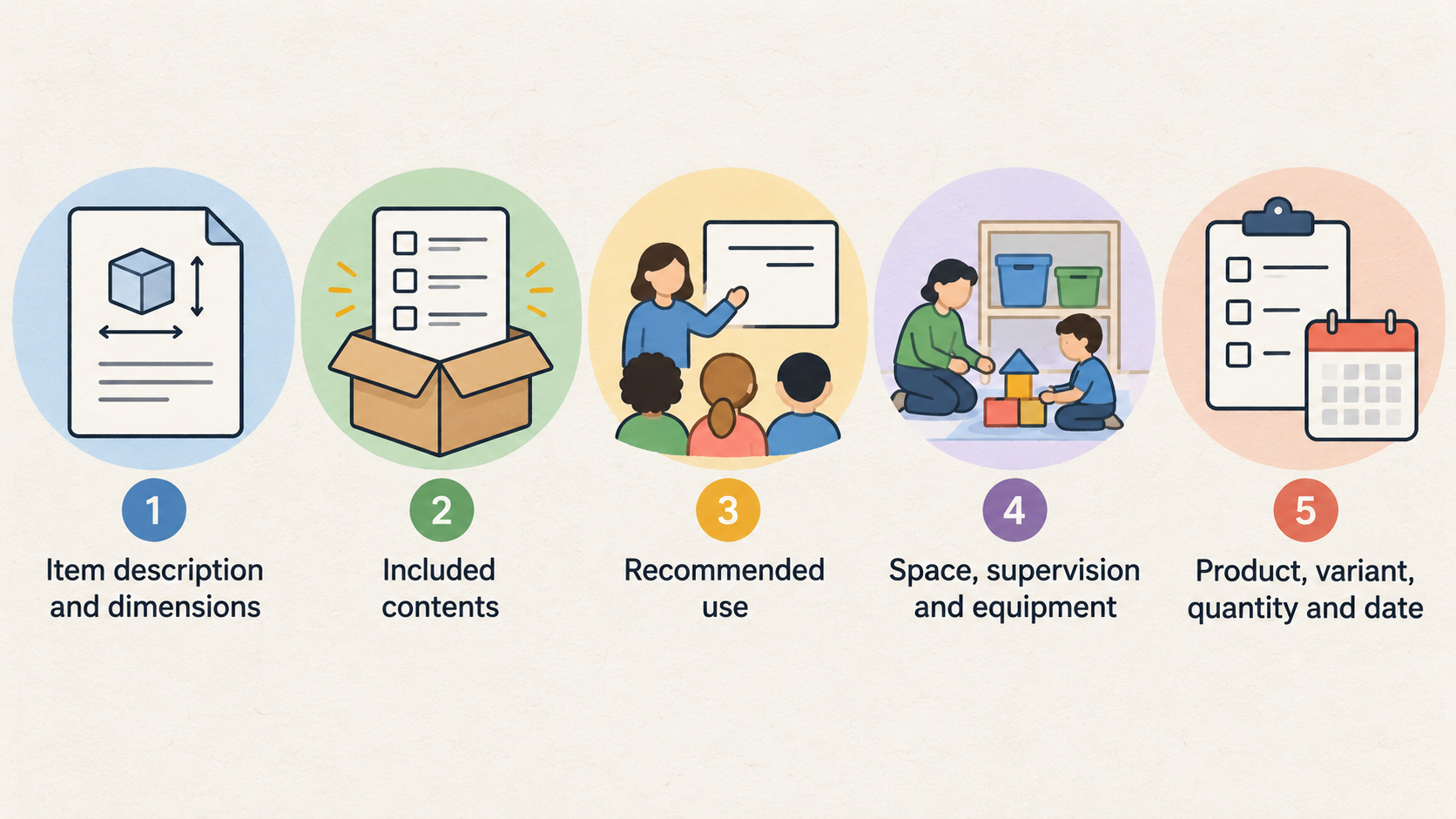
A wide catalogue does not answer the purchase questions that carry the most risk. Product pages, rather than category labels, are where a buyer should confirm the item description, dimensions, included contents, recommended use and any information relevant to the intended learners or classroom. For larger or more complex items, check that the practical requirements match the available space, supervision arrangements and existing equipment.
Availability should also be treated as order-specific. A category can be visible while a particular product, variant or quantity is unavailable or unsuitable for the date you need it. If a school is buying for a term start, event or programme launch, leave time to confirm the items and ordering process before relying on them in a plan.
For UK buyers, do not assume international delivery, shipping timing, taxes, duties, currency conversion or the final landed cost from the catalogue itself. Ask for, or locate, current information that applies to your destination and basket. The same caution applies to bulk pricing, purchase-order arrangements and any school-specific procurement requirements: these may matter greatly to a larger order but are not established merely by the visible navigation.
Value is also contextual. A low item price may not represent the lowest overall cost once delivery, tax, exchange-rate effects, replacements or return arrangements are considered. Compare like-for-like specifications and the full order cost, especially where multiple quantities or furniture are involved. This approach keeps the decision tied to the actual purchase rather than a general impression of the range.
Returns and Support: What to Verify
The retailer’s public returns page includes a Help contact route, an Email Us option and a listed telephone number, 1-800-627-2829, with Monday to Friday hours of 9am to 7pm EST. That gives prospective buyers a visible starting point if they need clarification before ordering or support afterwards. It is sensible to use the current official route for questions that cannot be resolved from the relevant product and policy information.
Before placing an order, read the current returns information in full and check how it applies to the exact items in your basket. Ask whether the item is eligible, whether any condition, packaging or timing requirements apply, who bears any return cost, and what process applies if an item arrives damaged or incorrect. For a UK order, also establish whether cross-border shipping changes the practical return process or cost.
For a school or programme order, keep a record of the product links, selected variants, quantities, price information and any written confirmation received before purchase. This makes it easier to compare what was ordered with what arrives and to explain a support query clearly. If another person will receive the delivery, agree in advance who will inspect it and who can contact support.
Published help and returns information is useful, but it is not a guarantee that every future order or product will qualify for the same outcome. Check the current terms immediately before purchase and retain the order confirmation. Where the order is time-sensitive, it is prudent to seek clarification before committing funds rather than relying on a later return as the fallback plan.
A Practical Buying Checklist for UK Customers
Use this checklist to decide whether a specific Discount School Supply order is workable for your setting.
Define the teaching or family need. List the activity, learner age, room or programme requirement, quantity and deadline. Then compare those needs with the individual product description rather than relying only on the category name.
Check the exact basket. Confirm the chosen variant, dimensions, contents and quantity for every item. For arts and crafts supplies, consider whether the format and amount suit the planned activity. For furniture or room resources, check practical fit and handling needs.
Confirm UK delivery before treating the order as available. Check whether the intended address can be served, the applicable delivery method, estimated timing and any restrictions. If the order is linked to a school date or event, allow for confirmation and contingency time.
Calculate the total landed cost. Request or identify the current item total, delivery charge, currency implications, taxes, duties and any other order costs that apply. Compare the final figure with alternative suppliers and the available budget, not just the headline price.
Read the current returns information. Check eligibility and the process for the particular products, including what happens if there is a problem with delivery or condition. For a cross-border order, establish the likely return route and cost before ordering.
Use the official support route for unresolved questions. The returns page shows Help, email and telephone contact options. Prepare the product details, destination, quantities and question so that the response can address the proposed order rather than a general category.
Match the decision to order complexity. A small, non-urgent order may need only the normal product, cost and returns checks. A larger school purchase, a furniture order or a deadline-sensitive programme order deserves written confirmation of the points that could affect delivery, total cost or post-purchase support.
This framework does not produce a universal yes-or-no verdict. It helps a buyer decide whether the available information is sufficient for their particular order. If a key point remains unclear, pause and verify it before proceeding.
Frequently Asked Questions
Does Discount School Supply appear relevant for early-years and K-12 classroom purchases?
It appears relevant as a catalogue to research for a range of education settings. The visible navigation includes Arts & Crafts, Furniture, Infant & Toddler, Play & Learn, elementary-school and programme-oriented areas. That supports considering it for early-years and classroom shopping, but not assuming that a particular item is appropriate. Check each listing against the age group, activity, quantities and practical setting you have in mind.
What should UK buyers confirm about delivery, duties and total order cost?
Confirm the current delivery availability for the intended UK address, the delivery method and timing, and every cost that applies to the completed order. That should include the item total, shipping, currency effects, taxes, duties and any other charges. These details are order-specific, so they should be checked on the official retailer information or with support before a budget decision is final.
How should shoppers check whether an item can be returned?
Read the current official returns information and apply it to the exact item and order. Check eligibility, deadlines, condition requirements, the process for incorrect or damaged goods, and any return costs. UK buyers should also ask how an international return would work in practice. The public returns page provides Help, email and a listed phone contact route if clarification is needed.
What information should a school leader gather before placing a larger order?
Gather the final product links and variants, quantities, room or programme requirements, destination, deadline, full delivered cost and the current returns position. It is also useful to record who will receive and inspect the order and who will contact support if needed. For a complex or time-sensitive purchase, seek written clarification on the unresolved order-specific points before approval.
Sources
Related reading
- Brighterly review: practical buying assessment
- How to choose K-12 classroom learning tools for your needs
- When to buy K-12 classroom learning tools for better value
- How to identify genuine K-12 classroom learning tools deals
Editorial information: About our editorial team · Read our editorial policy · Read our affiliate disclosure.