AI-generated illustration — not a retailer product photo.
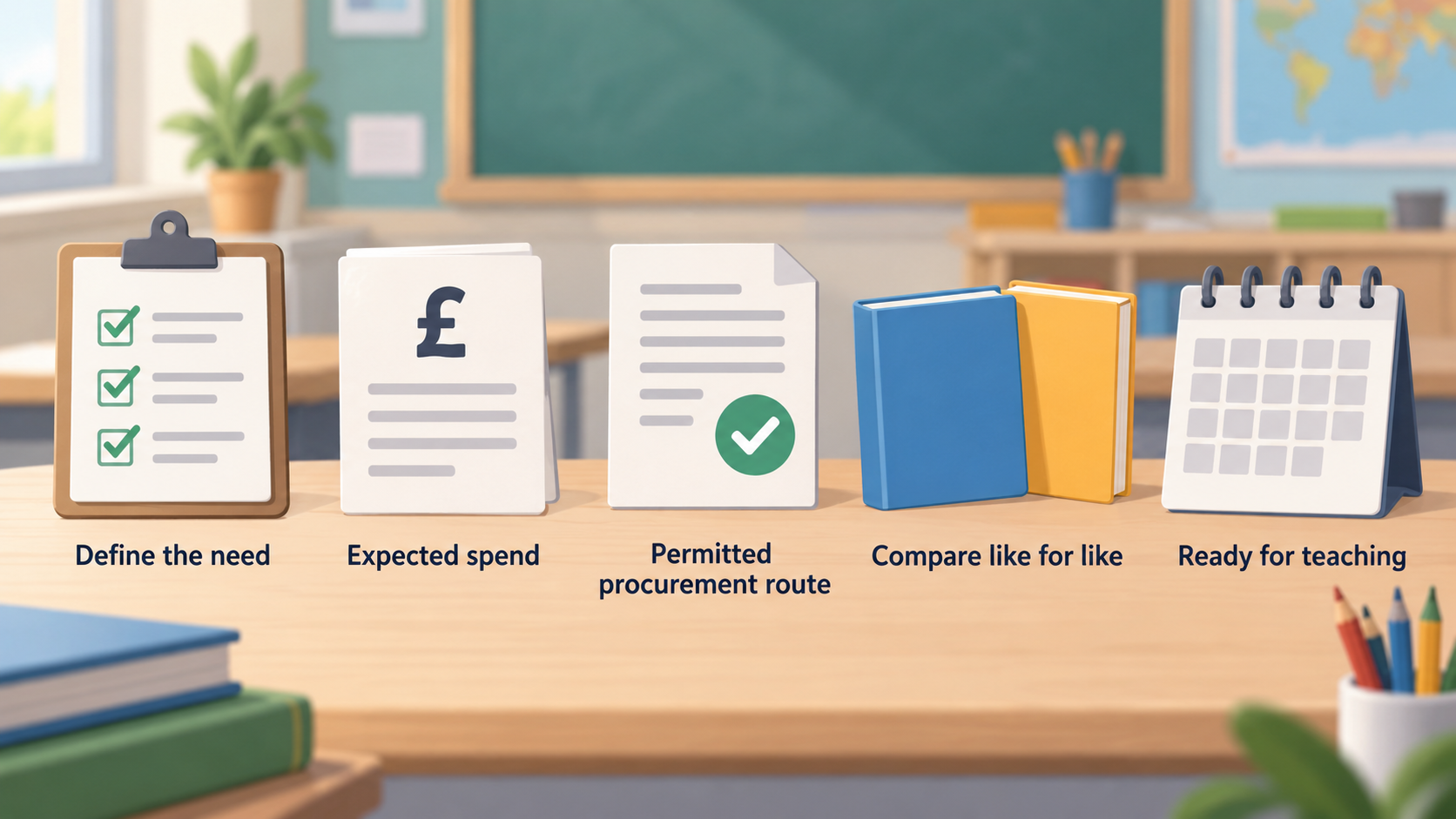
Buying at the right moment is less about spotting a sale and more about making a purchase that will work in the classroom, fit the budget and follow the right route. For English schools, that means starting with the requirement and expected spend, then identifying a permitted procurement route before comparing offers. Family buyers can use the same discipline: define the need, compare like for like and include the full cost of getting usable materials when they are needed.
Start with the purchase decision, not the sale
AI-generated illustration — not a retailer product photo.
“Better value” is not automatically the lowest advertised price. It is the option that meets the intended learning need in the required quantity, at an acceptable total cost, with terms and timing that make the purchase usable.
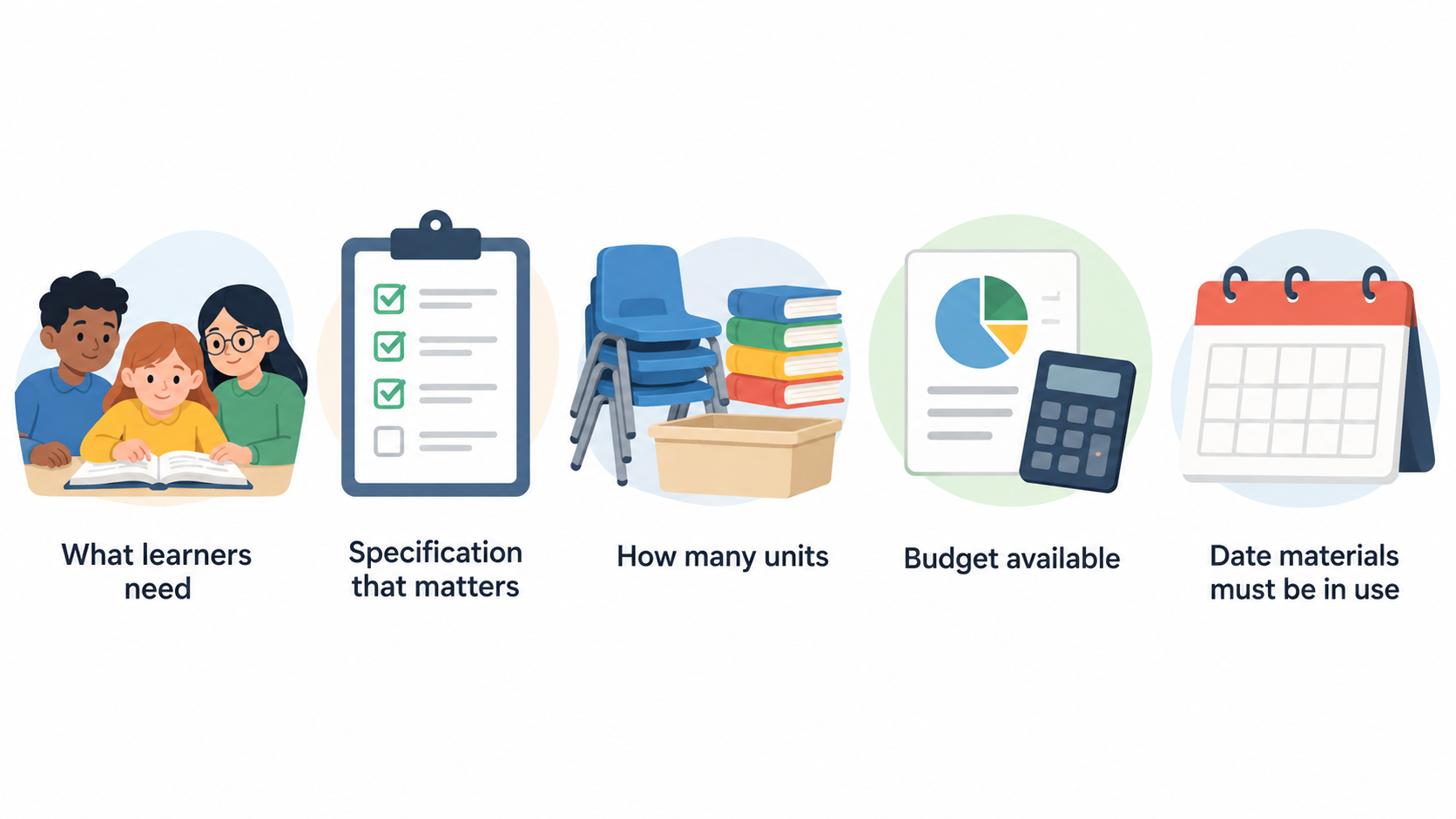
For a school, begin with a short purchase brief. Record what learners need, the specification that matters, how many units are required, the budget available and the date by which the materials must be in use. Then establish the expected spend. The Department for Education (DfE) says that, once a school knows what it is buying and how much it is spending, it should identify the buying routes permitted by procurement regulations.
That order matters because a promotion can be attractive while still being unsuitable for the requirement. A discounted bundle may contain the wrong formats, too few consumables or delivery terms that do not fit the teaching plan. Conversely, a compliant route with pre-agreed terms may offer stronger overall value even when its headline price is not the lowest figure seen first.
For families, the route may be simpler, but the decision sequence still helps. Identify whether the purchase is for an immediate classroom activity, a planned project or a replenishment need. Compare the same pack size, specification and delivery position before deciding that one offer is cheaper.
Treat a sale as one input to the decision, not the decision itself. A clear requirement gives you a fair basis for comparing prices and prevents a saving on an item that will need to be replaced, supplemented or reordered.
Map buying windows to the school year
AI-generated illustration — not a retailer product photo.
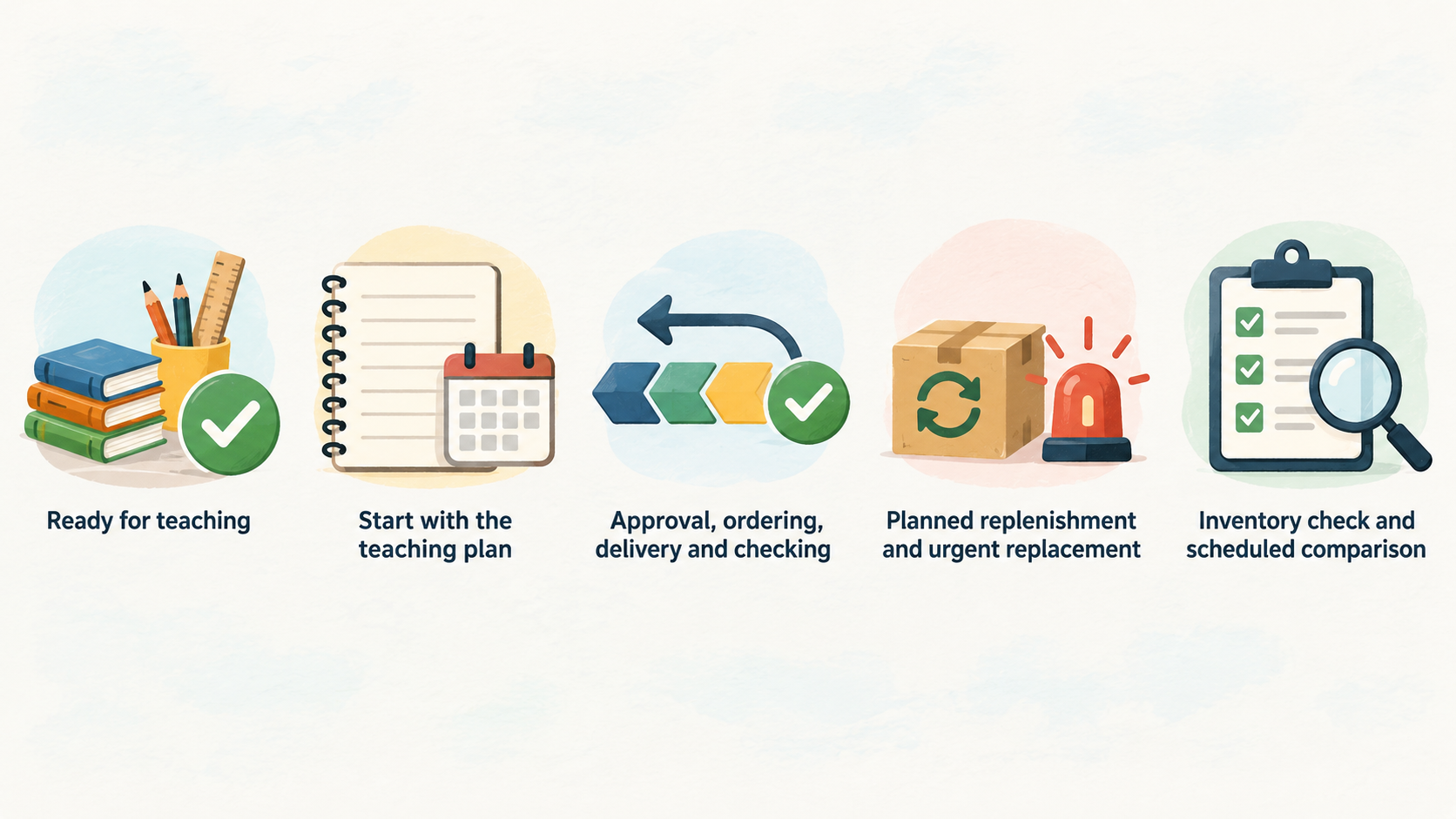
Set buying windows around the point at which materials must be ready for teaching, rather than around an assumed universal promotion calendar. Start with the teaching plan: term starts, scheduled projects, enrolment changes, clubs, holiday programmes and any date on which stock must be available. Work backwards to allow time for approval, ordering, delivery and checking the order.
Separate planned replenishment from urgent replacement. Planned replenishment is a good candidate for an inventory check and a scheduled comparison. You can confirm the quantity on hand, standardise the specification and consider whether consolidating related needs improves the total order. Urgent replacement is different: if a missing item would disrupt a lesson, waiting for a possible future offer can create a larger operational cost than any potential saving.
Use a simple three-window view:
- Plan: identify recurring needs before the relevant teaching period and confirm the quantity and specification.
- Compare: once the need is defined, compare eligible routes and like-for-like offers while there is still enough lead time.
- Buy: place the order when the chosen option meets the requirement and can arrive in time; do not let a speculative discount search consume the remaining delivery window.
Retailer category availability can also inform the inventory conversation without predicting prices. Discount School Supply lists classroom categories including Arts & Crafts Supplies, Paint & Paint Tools, Paper and Paper Rolls, Glue & Adhesives, and Classroom Value Packs. These categories have different consumption patterns, so record the unit of use that matters locally—for example, sheets, bottles, brushes or project packs—rather than relying on a generic “art supplies” line.
Keep a brief purchase record after each planned order. Note the specification, quantity, route used, delivery outcome and any item that proved unsuitable. The next buying window can then begin with actual classroom information rather than recollection.
Use procurement routes before comparing discounts
AI-generated illustration — not a retailer product photo.
For eligible English schools, procurement compliance is part of value. DfE guidance says schools should identify the buying routes permitted by procurement regulations after establishing what they are buying and the expected spend. This is not an administrative step to leave until after choosing a deal; it shapes which offers can properly be compared.
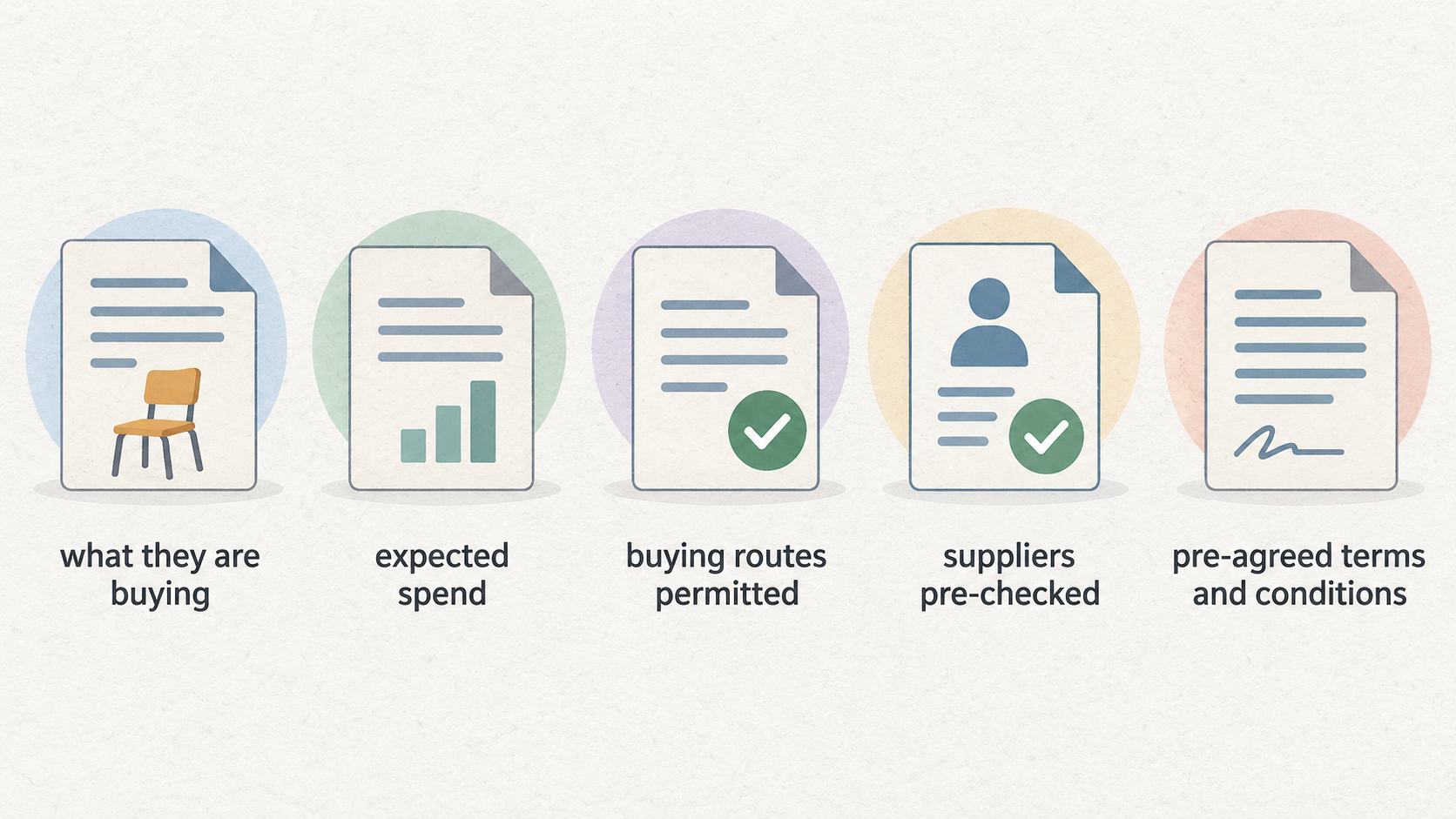
The DfE has reviewed and approved buying options for schools. Its guidance says these options are available by category through the Get help buying for schools service and can offer compliance with relevant procurement legislation, suppliers pre-checked by the approved-option provider, and pre-agreed terms and conditions.
An approved buying option can therefore be more valuable than waiting for a standalone discount when it fits the requirement and spend. The benefit is not a promise that every item will be cheaper. It is a more controlled starting point: the school can assess the required category through a route designed to support compliant purchasing, with supplier and terms information already considered by the provider.
Use the route decision in this order:
- Define the goods or services and the expected spend.
- Identify the permitted buying routes.
- Check whether a relevant DfE-approved option fits the category and requirement.
- Compare the usable, like-for-like options available through the appropriate route.
- Retain the rationale and the order record.
If an approved option does not fit the exact requirement, do not force the purchase into it. Use the appropriate permitted route and document why it is suitable. The key point is that price comparison follows route selection; it does not replace it.
Know when waiting costs more
Waiting can be sensible when the need is planned, stock is secure and there is enough time to compare genuinely comparable options. It becomes a false economy when the lower headline price does not produce a usable purchase.
Test any “wait” decision against five questions. Is the specification still correct for the activity? Is the quantity sufficient for the group? Can the item arrive and be checked before it is needed? Does the offer include everything required to use it? Is the proposed buying route appropriate for the school’s purchase?
A low price may lose its value when an incomplete bundle requires a second order, when a substitute does not match the planned activity, or when delivery arrives after the teaching window. The direct cost is only one part of the decision. Staff time spent sourcing replacements, adapting lessons or managing an avoidable urgent purchase can also matter, even if it does not appear in the advertised price.
For an essential replacement, decide from the operational deadline. If an item is needed for imminent teaching and a suitable option can meet the requirement through the appropriate route, buying now may be the better-value choice. Record that it was an urgent replacement, then review whether a planned replenishment level could reduce similar pressure next term.
For school purchases, do not use urgency to bypass the route question. The DfE guidance still points buyers first to the permitted routes once the requirement and spend are known. For family buyers, apply the equivalent discipline: compare the total delivered cost, the usable specification and the arrival date, rather than a percentage-off message alone.
Build a buy-now-or-wait comparison
Use one worksheet for every meaningful purchase. Its purpose is to make each offer comparable and show whether waiting is a reasoned choice or simply a hope that a lower price might appear.
First, state the need in one sentence: “We need enough washable paint and paper for the Year 4 project by the first lesson of term.” Add the required quantity, minimum specification and latest acceptable delivery date. If the need is a school purchase, also record the expected spend and the permitted route identified for it.
Next, list the options in matching units. Compare the same pack count, size, material, age or classroom suitability, and included accessories. Do not compare a small pack with a value pack unless you convert both to the same usable quantity. Discount School Supply’s category structure is a useful reminder to keep related needs distinct: paint and paint tools, paper and paper rolls, and glue and adhesives may be bought for one project but have different specifications and rates of use.
Then calculate the total delivered cost for each suitable option. Include the item price, delivery charges, any required supplementary items and the cost of obtaining the quantity actually needed. Mark any option that cannot meet the date or does not meet the specification as unsuitable rather than treating it as a cheaper competitor.
For English schools, add a route check before ranking prices:
- What is being bought, and what is the expected spend?
- Which buying route is permitted for that purchase?
- Is there a relevant DfE-approved buying option?
- If using an approved option, what pre-agreed terms and supplier checks are relevant to the decision?
- What record will show why this option was selected?
Finally, decide now, wait or revise the requirement. Buy now when a suitable option meets the deadline, route and total-cost test. Wait only when stock and timing leave room to do so without disrupting teaching. Revise when none of the options meet the specification or delivery need.
Keep the completed worksheet with the order record. Over time, it becomes a practical reference for future replenishment: which quantities were right, which formats were useful and which ordering lead times worked in practice.
Frequently Asked Questions
Should schools wait for back-to-school promotions before buying classroom learning tools?
Not automatically. Start with the classroom requirement, expected spend, permitted buying route and latest usable delivery date. Waiting can be reasonable for a planned, non-urgent replenishment with secure stock and sufficient lead time. If materials are needed for imminent teaching, or if delay risks an unsuitable substitute or a second order, a suitable purchase now may provide better overall value.
How should a school choose a buying route in England?
First establish what is being bought and how much the school expects to spend. The DfE says buyers should then identify the buying routes permitted by procurement regulations. Its Get help buying for schools service lists DfE-approved buying options by category, including options that offer compliance support, pre-checked suppliers and pre-agreed terms and conditions. Use the route that fits the specific requirement and retain the decision record.
What should family buyers compare besides the advertised price?
Compare the exact usable quantity, specification, included items, delivery charge and expected arrival date. A lower item price is not necessarily better value if it supplies too little for the activity, omits necessary materials or arrives after the project date. For art-and-craft purchases, compare like with like—for example, paper by the relevant size and sheet count, or paint by the usable volume and the tools included.
When is it better to replace an essential classroom item immediately?
It is usually better to buy promptly when the item is needed for imminent teaching and a suitable option can meet the specification, quantity and delivery deadline through the appropriate route. Record why the purchase was urgent, then use the next inventory review to consider whether a planned replenishment threshold could reduce future urgent orders.
Sources
Related reading
- Brighterly review: practical buying assessment
- Discount School Supply review: practical buying assessment
- How K-12 classroom learning tools should fit, feel, and perform
- How to identify genuine K-12 classroom learning tools deals
Editorial information: About our editorial team · Read our editorial policy · Read our affiliate disclosure.