AI-generated illustration — not a retailer product photo.
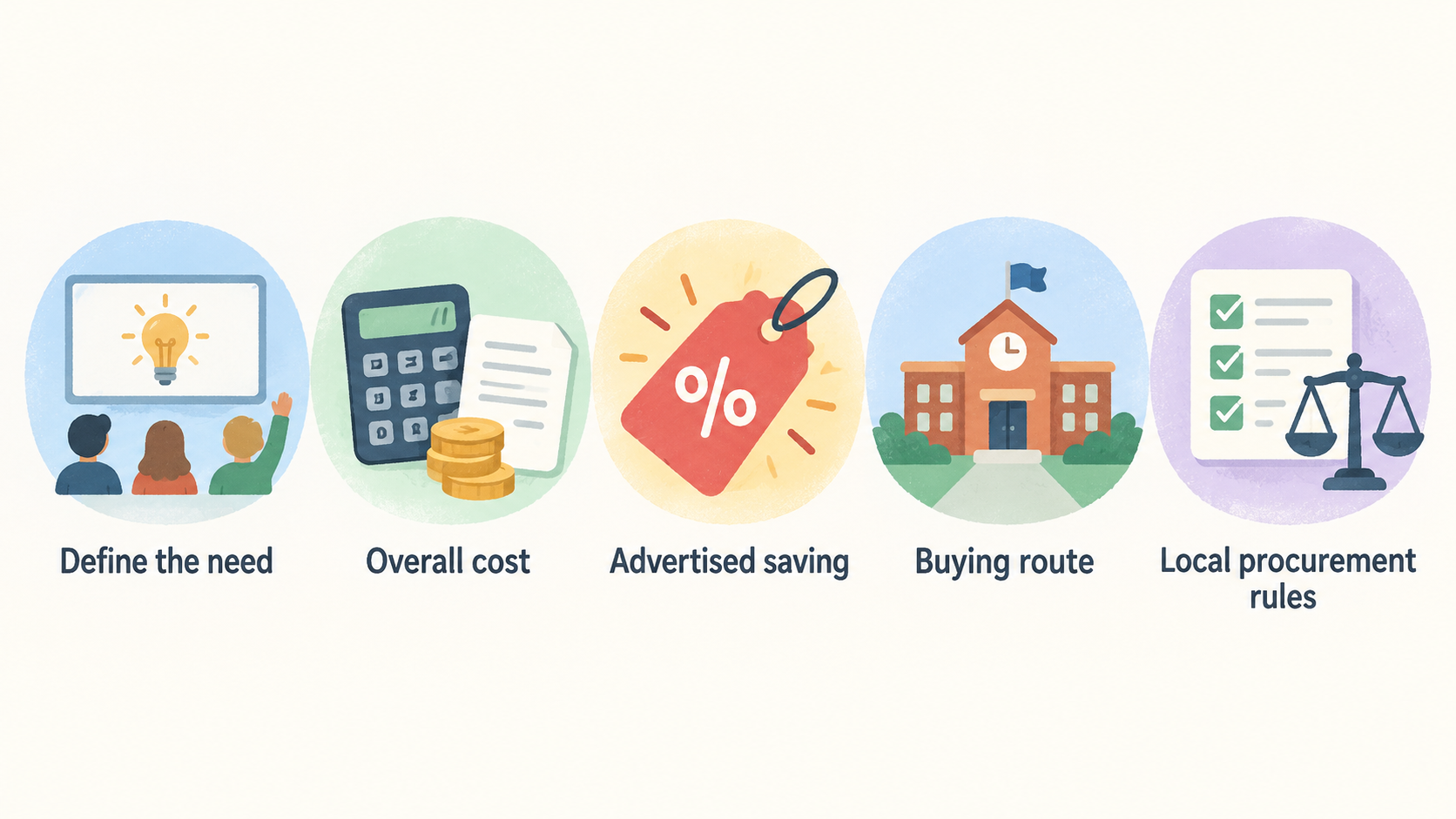
A classroom learning-tool deal is genuine when it solves a defined teaching or learning need at a defensible overall cost. The advertised saving matters, but it is only one part of the decision. For UK schools, the buying route and local procurement rules can also affect whether an offer is suitable; family buyers can use the same value checks without the formal school process.
What Counts as a Genuine Classroom Learning-Tool Deal?
AI-generated illustration — not a retailer product photo.
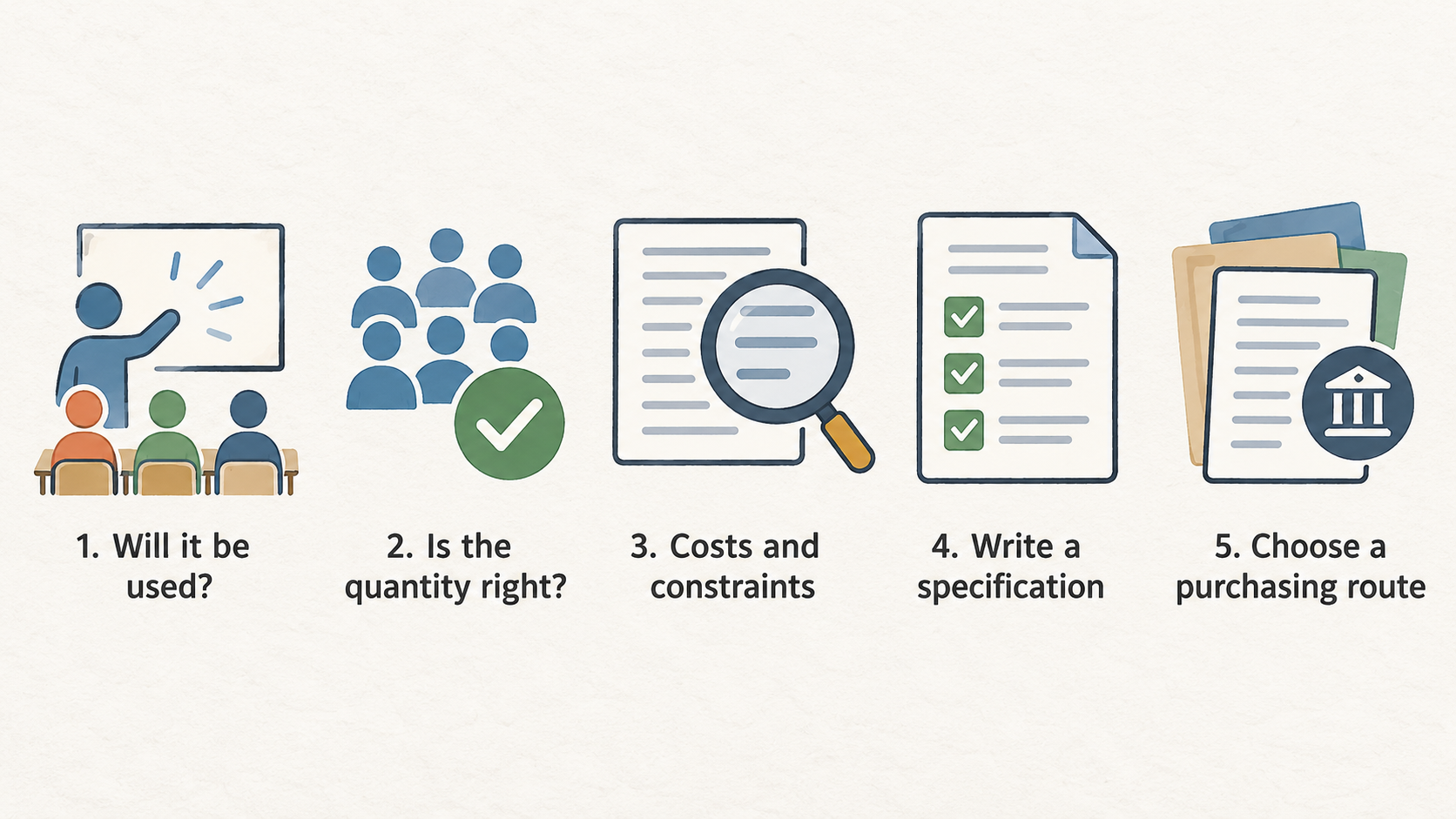
A low price is not automatically good value. Start by asking whether the item will be used, whether the quantity is right, and whether the terms leave the buyer with costs or constraints that were not visible in the headline offer.
For a school, a genuine deal should also fit the purchasing route appropriate to the value of the purchase. Department for Education guidance says that schools should prepare for procurement, write a specification and choose a route that reflects the amount being spent and their own rules. That can mean a framework agreement, a catalogue purchase, quotes or a more formal process.
For a teacher or family buyer, the practical test is simpler: compare offers that meet the same need, then include delivery, replacement and return considerations before deciding. A discounted product that is unsuitable, incomplete or difficult to return is not necessarily the lower-cost choice.
Start with the Classroom Need and Specification
AI-generated illustration — not a retailer product photo.
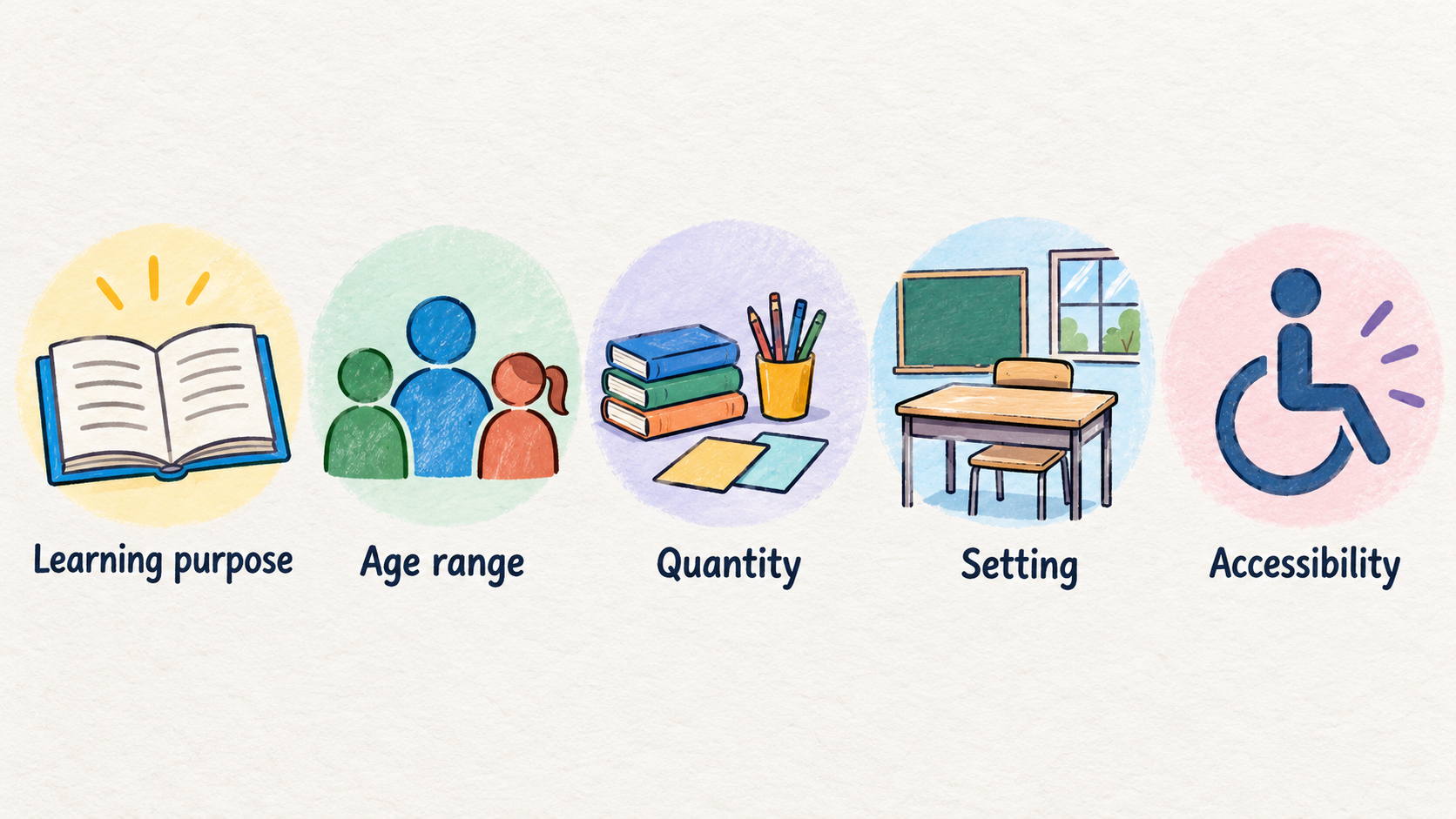
Define the need before looking at discount badges. Write down what learners will do with the resource, the relevant age range, the number of pupils or children who need access, and the setting in which it will be used. This prevents an attractive bundle from becoming a purchase that does not support the intended activity.
A useful specification can be short. Include the required learning purpose, format, quantity, size or storage limits, durability expectations, accessibility considerations and any materials or equipment the item must work with. If the resource is consumable, note how often it is likely to need replacing.
This is especially helpful when comparing a broad retailer range. Discount School Supply’s navigation shows categories spanning arts and crafts, curriculum, furniture, infant and toddler, and play and learn, as well as classroom value packs. A wide range can make it easier to find a match, but it does not replace checking that the selected product meets the actual specification.
Use the same written requirement for every option. If one pack includes classroom-ready quantities and another only supplies a sample-sized amount, they are not like-for-like offers even if their product names appear similar.
Calculate Total Cost, Not Just the Sale Price
Compare the cost of achieving the outcome, not just the price shown beside one item. Begin with the item price, then divide it by the usable quantity: a 30-pupil activity, a single learner’s kit and a display resource should be compared on different units.
Next, list what is included and what must be bought separately. A cheaper resource may require compatible consumables, storage, accessories or replacement parts. A larger bundle may look economical but create waste if a significant proportion will not be used.
Then check the terms that affect the final cost. Delivery charges, minimum order thresholds, delivery timing, return conditions and the time needed to correct an unsuitable order can all change the value of an offer. Keep the estimate proportionate: a small family purchase may need a quick comparison, while a school purchase may justify a documented cost table.
For school purchases, do not treat price comparison as separate from procurement planning. DfE guidance describes preparing a requirement and selecting a route to buy, including catalogue purchasing for low-value goods and obtaining at least three supplier quotes for some low- or medium-value purchases. Follow the school’s own thresholds and procedures, as they may determine what evidence is needed.
A simple comparison line can be enough:
- Required outcome and quantity
- Item and delivery cost
- Included and excluded components
- Expected replacement or consumable cost
- Return and delivery constraints
- Procurement or approval steps
The best option is the one with the lowest defensible total for the defined need, rather than the largest percentage reduction.
Look for Value That Supports Everyday Use
Useful value usually supports routine classroom use. It may come from an appropriate pack size, clear product information, compatible components or the ability to source related items in one place. Retailer category structures can also help buyers compare relevant alternatives rather than forcing an unrelated substitution.
For example, classroom value packs can be worthwhile when their quantities, contents and intended use align with the specification. They are less useful when they include unwanted extras, duplicate materials already held by the school or a quantity that exceeds realistic use.
Prioritise benefits that reduce a real constraint: enough materials for the group, a format suitable for the learners, or a product range that helps you complete a planned activity. Treat non-essential additions as neutral until they solve a stated need. This keeps the comparison focused on everyday usefulness rather than promotional presentation.
Check the Limits, Terms and Procurement Risks
Pause when the reference price is unclear, when the pack contents cannot be compared directly, or when a discount applies only under conditions that change the total cost. Ask whether the claimed saving is against a genuinely comparable item and whether the offer remains suitable once quantities and exclusions are considered.
Read the seller’s delivery and returns information before ordering, particularly where timing matters or an item is specialised. These terms can determine whether an unsuitable purchase can be corrected without creating extra cost or delay. Do not assume that a returns page means every product has identical conditions; check the terms that apply to the order.
School buyers should also check the internal purchasing route before committing. The DfE advises schools to consider the value of what they are buying, prepare a specification and use the appropriate route, which may include a framework, catalogue, quotes or a formal buying process. A good commercial offer can still be unsuitable if it bypasses the school’s required approval or evidence process.
Finally, distinguish a useful alternative from a forced substitution. If a discounted item fails the learning, age, safety, accessibility, quantity or compatibility requirement, the saving is not comparable to the resource originally needed.
Use a Simple Decision Process Before You Buy
AI-generated generic editorial illustration — not a retailer product photo and does not depict the reviewed product or service. Illustration supporting this section.
 Use a repeatable sequence so that decisions can be explained later:
- Define the teaching or learning need and write a concise specification.
- Shortlist only offers that meet that specification.
- Compare usable quantity, included components, delivery and likely follow-on costs.
- Read the relevant delivery and returns terms.
- For school purchases, confirm the correct internal procurement route and approvals.
- Record why the chosen option offers the best fit and defensible total cost.
For higher-value school purchases, the record may need to include supplier research or quotes. DfE guidance identifies at least three supplier quotes as one route for some low- or medium-value purchases, while the appropriate route depends on spending value and school rules. Do not use a fixed quote rule as a substitute for checking the school’s own policy.
For family buyers, a saved comparison note or basket screenshot may be enough. The purpose is the same: make sure the final choice meets the intended need and that the apparent saving is real after all relevant costs and terms are considered.
[Use the classroom purchasing comparison checklist before finalising an offer.]
Frequently Asked Questions
Is the lowest advertised price always the best classroom-tool deal?
No. Compare only items that meet the same requirement, then consider usable quantity, included components, delivery, future consumables and return constraints. The cheapest listed item can cost more if it does not provide enough materials or needs essential extras.
How should I compare classroom-resource bundles with single items?
First define the exact quantity and components required. Price the bundle against the single items needed to achieve the same outcome, then remove the value of unwanted extras. A bundle is good value when its contents and quantity will genuinely be used.
Do UK schools need more than one quote for a classroom-tool purchase?
It depends on the value of the purchase and the school’s procurement rules. DfE guidance includes a route using at least three supplier quotes for some low- or medium-value purchases, but schools should check their own thresholds and the appropriate buying route before proceeding.
What should I check in a retailer’s delivery and returns terms?
Check delivery cost and timing, any conditions or exclusions, how returns are handled, and whether the terms work for the type of item and purchasing route. Review the terms before ordering rather than assuming a discounted product can be returned on the same basis as every other item.
Recheck current product details, measurements, delivery terms and return conditions before ordering.
Keep the final choice tied to the exact item and your own priorities.
Sources
Related reading
- Brighterly review: practical buying assessment
- Discount School Supply review: practical buying assessment
- How to choose K-12 classroom learning tools for your needs
- When to buy K-12 classroom learning tools for better value
Editorial information: About our editorial team · Read our editorial policy · Read our affiliate disclosure.